
When evaluating niche edits vs guest posts for B2B SaaS, many marketers realize they are not competing tactics in the way most link-building content pretends they are. Comparing them by format alone misses the point. A niche edit on a strong, relevant page can be more valuable than a guest post on a weak site. A well-placed guest post on a site your buyers actually read can also be more valuable than several average placements in the way most link-building content pretends they are. Comparing them by format alone misses the point. A niche edit on a strong, relevant page can be more valuable than a guest post on a weak site. A well-placed guest post on a site your buyers actually read can also be more valuable than several average placements… The format is just the container. What decides whether a link is worth anything is the site it sits on, the page it sits on, and whether a real person would ever land on that page and find the link useful.
That said, the two do behave differently, and knowing how helps you use each one where it actually fits.
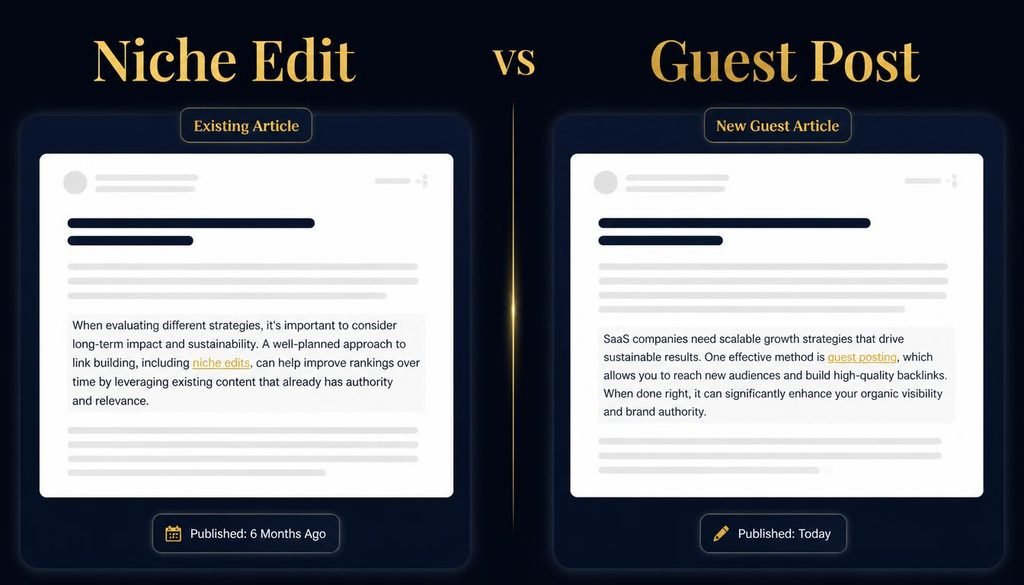
What a niche edit actually is
A niche edit means adding your link into a piece of content that already exists and is already published. The article was written for some other reason, maybe months or years ago, and your link gets inserted into it because it fits the topic.
Say you sell project management software. Someone already wrote “10 Tools to Manage Remote Teams in 2023” for a business blog, and it’s still ranking and pulling in traffic. A niche edit means your tool gets added to that list, with a sentence or two written around it so it reads naturally. You didn’t write the article. You’re just becoming part of it.
What a guest post actually is
A guest post is content you create specifically to be published on someone else’s site, usually with a link back to you built into it naturally.
If you run a developer tool, this might look like writing a genuinely useful technical piece for an engineering blog, something like “How We Cut Build Times by Restructuring Our CI Pipeline.” You get a byline, a link, and the chance to actually explain what your tool does and why it matters, instead of squeezing it into someone else’s sentence.
Where they actually differ
The obvious difference is that one is inserted and one is written from scratch. But the practical differences go further than that.
With a niche edit, you have almost no control over the surrounding content. You’re working inside someone else’s article, someone else’s tone, someone else’s structure. You can suggest wording, but the publisher usually has final say, and sometimes they’ll tweak it after the fact without telling you.
A guest post gives you room to actually say something. You can walk through a problem, explain your product’s role in solving it, and build a case instead of dropping a link into an existing list. That’s a real advantage if your product needs a bit of explaining, which most SaaS products do.
Turnaround time also differs. A niche edit can go live in days because the page already exists and just needs an edit approved. A guest post takes longer, since someone has to write it, someone has to review it, and revisions often go back and forth before it’s published.
On cost, people assume guest posts always cost more because you’re paying for content. That’s not really true. Pricing on both sides depends far more on the site itself, its traffic, its niche, and how selective the publisher is about who gets a link. A niche edit on a high-traffic, well-maintained page in a competitive niche can cost more than a guest post on a smaller site. The link type isn’t what sets the price. The site does.
Where niche edits make sense
Niche edits work well when there’s already a page ranking for something relevant to you, getting real visits, and covering a topic close enough to your product that adding you in doesn’t feel forced.
If you sell HR software and there’s an active, well-ranking page comparing onboarding tools, getting mentioned there can work well because the intent match is already sitting right there. Someone reading that page is already thinking about the exact problem you solve.
The limitations are real, though. Some of these pages are old and haven’t been updated in a while. Traffic can look fine in a tool but not reflect current visits. And if the topic isn’t a close match, the placement can read as bolted-on, which readers notice even if they can’t say why. There’s also no guarantee the page stays untouched. Publishers rewrite pages, remove sections, or let them go stale, and your link goes with it.
Where guest posts make sense
Guest posts make more sense when you have something worth explaining and an audience worth reaching that you don’t already have access to.
An AI SaaS company launching a new feature around, say, document summarization, might get more value from a guest post on a site read by the exact operations or legal teams that would use it, because the content can actually walk through the use case properly. A list mention wouldn’t do that justice.
The catch is cost and effort on the content side. Someone has to write something genuinely good, not filler. Editorial standards on decent publications mean weak content gets rejected or sent back for rewrites. And after all that work, the link still depends on the publisher keeping the piece live and not stripping it down later.
What to actually check before buying either one
This is where most SaaS marketers get it wrong, because they check the wrong things. A high DR or DA number doesn’t tell you much on its own.
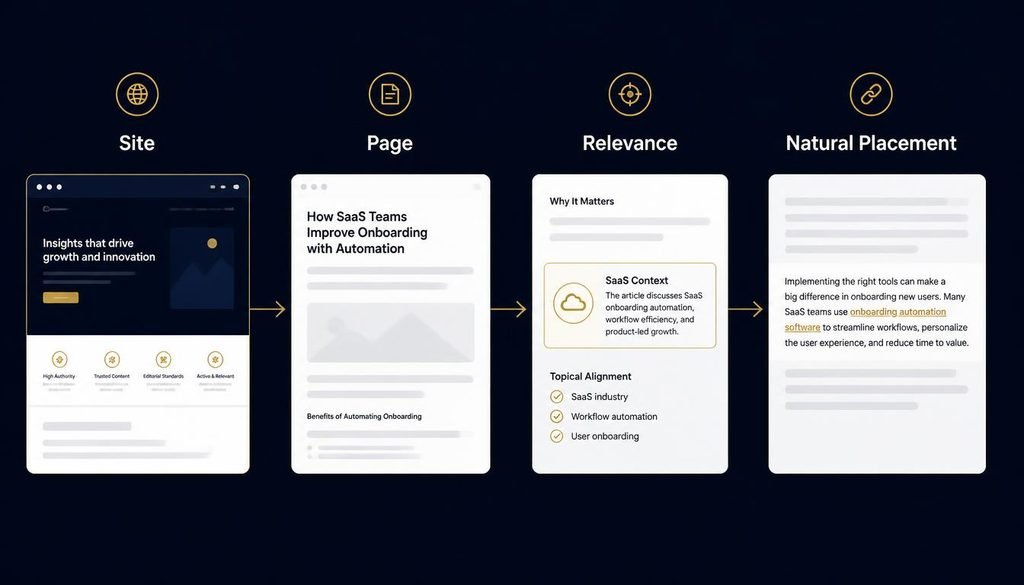
Plenty of sites build authority metrics through link schemes or expired domain tricks while producing almost nothing a real reader would want. What matters more:
Does the site’s traffic look real, and is it going to pages that would plausibly include your kind of link, not just to a homepage or a handful of unrelated posts propping up the average?
Is the specific page relevant, not just the domain in general? A marketing blog might be a fine domain but if the article is about restaurant SEO and you sell dev tools, the fit isn’t there no matter how good the site looks.
Does the placement make sense to an actual reader? If you removed the brand name and just read the sentence, would it feel natural, or does it read like something dropped in to sell a link?
Check the outbound links on the page too. If a page already links out to five unrelated SaaS tools that appear to have been added mainly for link placement, that’s a signal the placement won’t hold much weight, and it may not be the last unrelated link they squeeze in either.
And look at whether the site seems to exist to publish content, or exists to sell links with content as an afterthought. Thin About pages, no real author names, a blog that’s mostly guest contributions with barely any original editorial voice, these are worth noticing. If you work with a link-building provider, our guide on how to evaluate a link-building reseller covers what to check before putting their links on your own clients’ campaigns.
A simple way to decide
If there’s already a relevant, active page where your product genuinely belongs, a niche edit gets you there fast without the cost of content creation. If you need to explain something more complex, or you’re trying to reach an audience that doesn’t already know your brand, a guest post gives you the room to do that properly.
Neither answer holds up if the site itself isn’t right. A niche edit on the wrong page is a wasted link. A guest post on a low-quality site is a wasted week of writing. The tactic decides how you get the link. The site decides whether it was worth getting.
Different SaaS companies, different fits
A CRM company targeting sales managers might do well with niche edits on existing sales-process content, since so much of that content already exists and ranks.
A developer tool often benefits more from guest posts, because the audience reads technical write-ups and skims past anything that looks like a list of tool mentions.
For a broader look at how these tactics fit into a SaaS SEO strategy, see our SaaS link building services.
Project management platforms sit somewhere in between; there’s a lot of existing “best tools” content worth getting into, but there’s also room for guest content around remote work and team processes.
An AI SaaS product, especially one solving a newer problem, often needs guest posts early on simply because the “best tools” lists for a brand-new category might not exist yet. Niche edits only work if the relevant page is already out there.
Where this lands
Neither niche edits nor guest posts win by default. What decides the outcome is whether the site is real, whether the page is relevant, and whether the placement would make sense to someone who has no idea you paid for it. Get that part right, and the format becomes a secondary decision based on speed, budget, and how much you need to explain.
If you’re trying to work out which approach fits your SaaS product, or you just want a second opinion on a link opportunity someone’s already pitched you, Royal Growth Agency looks at this kind of thing daily across niche edits, guest posting, B2B SaaS link building, and contextual placements for B2B SaaS companies. Happy to take a look if it’d help.